More than 18 months had passed since the first committee meeting to discuss the possibility of a new birth cohort study. Much had been happening behind the scenes and momentum was gathering.
However, it had not been plain sailing for Dr Neville Butler, Dr James Douglas and other leading figures in UK science. Rather than refining and confirming plans made during that first meeting, there had been discussions about expanding the scope of the survey even further – including a suggestion that this new project could include 100,000 births.
Unfortunately, various applications for funding and sponsorship had been turned down, so it remained to be seen whether the ambitious aims of the study could still be achieved.
But time was ticking and decisions had to be made. Members of the full committee were ready to meet again in London to finalise the study design and questionnaire, and to set a date for the start of the survey.
The biggest challenge for the UK’s scientists that January evening, however, would have been navigating the capital’s icy and misty streets to Belgravia. Over the past year, the city had spent long periods shrouded in smog and Londoners had endured a snowy start to 1957.
In contrast to the ominous weather, Britain’s post-war boom was in full force. Rates of unemployment were at an all-time low and Prime Minister, Harold MacMillan would proclaim later that year that “most of our people had never had it so good”.
Unsurprisingly, with so much at stake the committee had expanded by a third since the first meeting. As the hubbub of the 26-strong group settled, it was announced that it was time to appoint a director for the study.
Surely the obvious choice would have been the experienced 1946 study director, Dr Douglas. However, he was conspicuous by his absence at the meeting so it was proposed that Dr Butler should take the reins, which was unanimously approved by the committee.
The group quickly got down to business. It was soon agreed that the first new birth cohort study in more than a decade would include all births in England and Wales during one week in 1957. The cohort would contain around 15,000 babies.
Dr Mabel Mitchell from Scotland’s Department of Health asked if the survey would be extended to Scotland. After much discussion it was suggested that Dr Douglas could run the Scotland survey from his Edinburgh base. Then the committee members received a surprise which may have explained Dr Douglas’s absence – he was in the process of starting another study, which would be a potential rival to the proposed 1957 cohort.
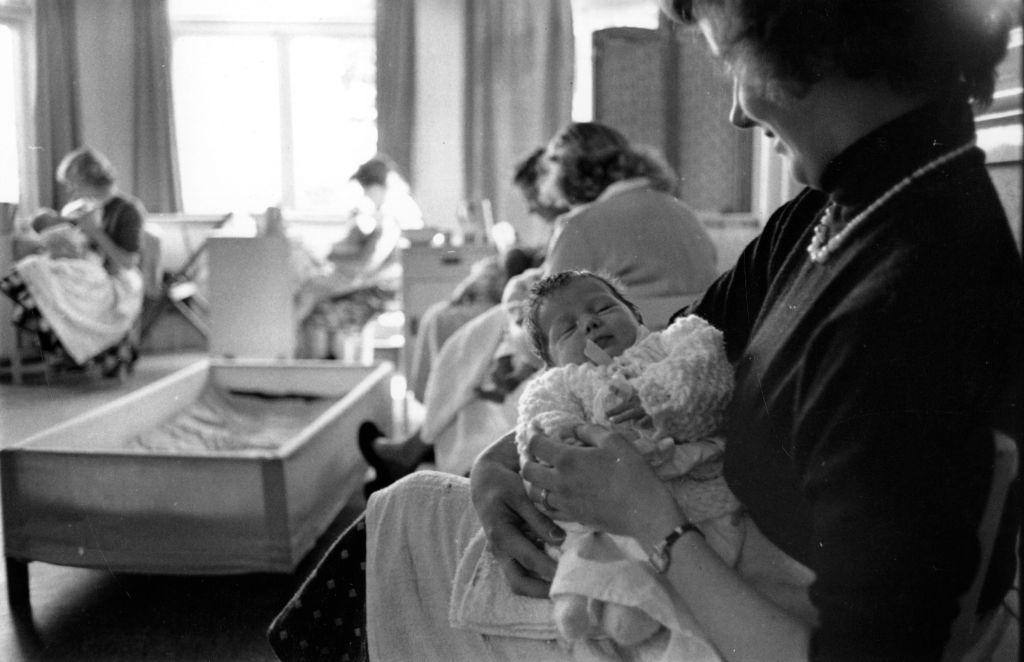
Mother rocks her young baby to sleep. London, UK, 1954. (Photo by Joseph McKeown/Picture Post/Hulton Archive/Getty Images)
Nevertheless, the scientists remained focused on the task at hand. They agreed that the main aims of the study would be to reveal the medical details about the causes of childhood fatalities during the first week of life. This would be through examining the details of pregnancy, the gynaecological history and the social status of mothers.
Dr Butler and the sub-committee concurred that the best person to supply this information would be the person present at the birth, who in the majority of cases would be the midwife.
Pilot surveys had been run in Cambridge, Norwich and London over the previous year, and the midwives had been willing and able to complete the questionnaires. Professor Butler confirmed that the information collected was accurate. From these pilot interviews, midwives had said the full questionnaire would take 20 minutes to complete so would not pose an undue burden on nurses .
Perhaps rather coyly, the Royal College of Midwives representative, Miss A. Wood, asked whether midwives around the nation should be informed in advance about their involvement in the survey. Either way, she was sure that they would be very willing to participate.
Thankfully for the NHS’s busy midwives, the government’s public health chief, Dr Mary Paterson was more decisive. She suggested that midwives might appreciate being notified, and should receive details about the survey, a copy of the questionnaire and instructions on how to complete the forms.
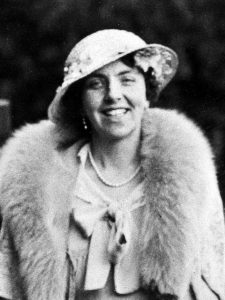
Lady Rhys-Williams, founding member of the National Birthday Trust Fund. Credit: Wellcome Library, London. Copyrighted work available under Creative Commons Attribution only licence CC BY 4.0 http://creativecommons.org/licenses/by/4.0/
A spirit of solidarity and cooperation appeared to permeate the atmosphere and push the team forwards. The main funder, the National Birthday Trust Fund, had limited resources to finance the study, but members of Britain’s medical establishment vowed to offer their services to realise the ambitions of the project.
Dr John Godber of the Ministry of Health said he would consult with the representatives of obstetricians and gynaecologists, GPs and nurses the length and breadth of England and Wales. He confidently asserted “that the information to be obtained would be of great potential value and from that point of view they (Ministry of Health) would have no difficulty in pronouncing in favour of the survey.”
Discussing the week of births to be studied, Dr Paterson suggested that March should be avoided and November might be better as hospitals tended to be quieter.
With the final pilot survey in Nottingham set for the end of February, the committee agreed that there would be enough time to make further alterations to the questionnaire so the study could start in the autumn.
Lady Rhys-Williams, of the National Birthday Trust Fund, suggested publicising the survey through the mainstream press. This would allow them to present the new initiative as a repeat of the 1946 study so it would not be thought as “an alarming idea to mothers”.
So, everything seemed to be set, and the nation’s second national birth cohort study was ready to be rolled out across England and Wales in November 1957.
But would there be any last minute hiccups? Would Dr Douglas steal Dr Butler’s thunder and start a new study; and, would Scottish mothers and babies be included in the survey?
Keep reading part three to find out what happened next.